
Just come back from a fantastic couple of hours at Thursley Common, at first there wasn’t much to see but as I walked along I found myself listening alert to eh sounds of the common, the birds, bees and insects, the breeze brusquely swooshing through the trees and grasses, from a distance a curlew called first its coor -wee call then its bubbling trill- a sound evoking an eerie, lonely, timeless feel that fitted with feeling of the open skied heathland space. As I listened it brought me to thinking about one of the recent episodes of Springwatch unsprung episodes where they interviewed Simon Scott who composes music using and integrating the sounds of the landscape. Now I thought about the sounds around me and began to appreciate just how much that these sounds contribute to the essence of the place and how on a personal scale they make me feel and relate to the landscape.
 There were a number of people out with cameras mainly photographing birds and in this instance I am guessing that many were taken of the Hobby. At first it perched for some time on an old dead tree in the open mire, then it began to hunt, swooping up in the air heading for a couple of dragonflies its talons reaching out as it plucked one of the dragonflies decisively out of the air. This I watched for around an hour, it was amazing to see its aerial agility, it almost skimming the open water then swiftly turning back up on itself, shooting up in the air, gliding a little then rapidly dashing back across the common. Today was quite breezy and it appeared that when the wind was at its strongest the Hobby found a suitable perch, waited for it to die down then took flight again.
There were a number of people out with cameras mainly photographing birds and in this instance I am guessing that many were taken of the Hobby. At first it perched for some time on an old dead tree in the open mire, then it began to hunt, swooping up in the air heading for a couple of dragonflies its talons reaching out as it plucked one of the dragonflies decisively out of the air. This I watched for around an hour, it was amazing to see its aerial agility, it almost skimming the open water then swiftly turning back up on itself, shooting up in the air, gliding a little then rapidly dashing back across the common. Today was quite breezy and it appeared that when the wind was at its strongest the Hobby found a suitable perch, waited for it to die down then took flight again.
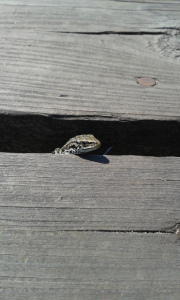
I also saw a Curlew, Tufted ducks, Stonechat and thanks to another photographer a little further round the common a raft spider consuming its prey of damselfly. If I had been a couple of minute’s earlier I may have seen it hunting, capturing and killing its prey. I saw a couple of common lizards too but not as many as I had done in the past and no sand lizards which again are normally present however I did go in the middle of a hot sunny day and maybe if I had been there early morning I may have been more successful.
